
Contents
Moving heavy equipment onto truck trays or trailers demands control, stability, and predictable handling. Without the right setup, steep angles, soft ground, and shifting loads can turn routine tasks into hazards. Purpose-built ramps solve the geometry problem, lowering gradients, improving traction, and guiding tyres or tracks along a defined path.
The result is safer loading, less strain on drivetrains and brakes, and fewer incidents caused by improvised methods. Choosing well means matching capacity, length, and surface features to the loads and environments you face every week.
Understanding the Role of Truck Ramps
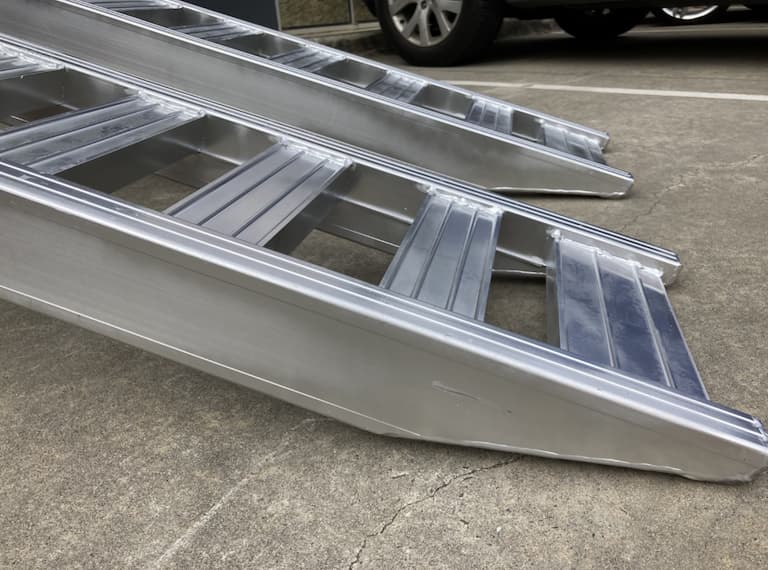
Ramps bridge height differences so wheeled or tracked equipment can transition smoothly from ground to tray. They distribute weight across engineered members, reduce approach angles to protect undercarriages, and provide grip where tyres would otherwise slip. In busy yards and job sites, truck ramps streamline workflows by removing the bottleneck of awkward lifts and risky manoeuvres.
Their value is practical: faster setup, safer ascents, and consistent performance across different vehicles and conditions. For operators, that consistency is what keeps schedules on track and equipment in good shape.
Key Factors When Choosing Heavy-Duty Ramps
Consistent specs, predictable handling, and fewer surprises when the job can’t wait are all things that you should expect by getting the right truck ramps.
Start with capacity. The ramp’s rating must exceed the heaviest load you’ll move, including attachments, fluids, and tools. Length controls gradient: longer ramps reduce the angle, improving traction and stability, especially important for low‑clearance vehicles or wet surfaces. Width should match tyre or track stance with a margin for steering corrections, while raised edges help guide wheels and reduce lateral slip.
Different designs suit different workflows. Folding ramps save space and make manual handling easier when storage is tight or loading locations change frequently. Fixed ramps offer maximum rigidity for repeated heavy loads and are ideal where stability outranks portability. Lightweight configurations suit smaller vehicles and frequent moves; reinforced heavy-duty builds handle industrial machinery and uneven terrain.
Surface design also matters. Serrated or punched profiles bite into tyres and shed mud, while reinforced beams limit flex under asymmetric loads. Secure connection points, like pins, hooks, or locking plates, prevent kick-out during loading.
Portability is a practical consideration: folding or modular designs suit multi-site work, while fixed, heavier builds favour repeated high-capacity tasks. Assess ground conditions too; firm, level bases are essential for safe use.
Alternatives within the same branch include modular systems that adjust length or width, and paired ramps that can be spaced for varying track widths. The right option balances gradient, grip, and handling: longer for gentler angles, wider for stability, and more aggressive traction for mud, rain, or loose gravel. Match the configuration to your fleet and the surfaces you encounter most often.
Materials and Durability
Aluminium and steel dominate for good reasons. Aluminium delivers high strength-to-weight, corrosion resistance, and easier manual handling; ideal when ramps are moved often or stored on vehicles.
Steel brings sheer toughness and impact tolerance, suiting heavy plant and rough environments where abrasion and point loads are common. Both can be engineered for high capacities; the choice hinges on how often you move the ramps and how harsh the conditions are.
Durability depends on design and care. Look for reinforced members, quality welds or fasteners, and load paths that spread stress rather than concentrating it at a single joint.
Keep surfaces clean to preserve traction, inspect for cracks, dents, or bent sections, and retire any ramp showing structural damage. Replace worn grip plates and keep attachment hardware tight. Routine maintenance extends service life and preserves safety under real-world loads.
Practical Tips for Safe Use
- Stable base: Set ramps on firm, level ground; avoid soft edges and fill gaps with solid cribbing if needed.
- Secure attachment: Use the ramp’s designed locking or pin system – no improvised tie-downs.
- Controlled approach: Drive or push straight on, slowly, with spotters when visibility is limited.
- Weight discipline: Never exceed rated capacity; include accessories and fluids in the total.
- Traction and alignment: Keep tyres centred; avoid turning or braking hard on the ramp.
- Routine checks: Inspect before each use; tighten hardware and replace worn surfaces promptly.
Other Applications
Beyond trucks, the same ramp principles apply to loading machinery onto trailers, moving recreational vehicles, and positioning equipment onto raised platforms. Wider profiles help with staggered wheelbases, longer ramps protect low-clearance gear, and aggressive traction patterns support wet or muddy conditions.
If your tasks vary, choose a configuration that balances portability with capacity so you’re not over- or under-spec’d when switching between vehicles and environments.
Making the Right Choice
Safe loading comes down to matching capacity, length, width, and traction to your actual tasks, then using ramps with disciplined setup and steady technique. A well-chosen configuration protects equipment, reduces operator risk, and keeps jobs moving. No improvisation, no surprises.
Prioritise gradient control, secure attachment, and routine inspection, and you’ll get reliable performance day after day. When the ramp fits the job, loading becomes predictable, efficient, and far safer for everyone on site.
