
Dressing for work can be tricky. Finding gear that keeps you comfortable, safe, and looking good during a long shift requires picking the right pieces for your specific job. Let us take a look at the essential workwear items every tradie and worker needs to stay ready for action on the site.
Shorts
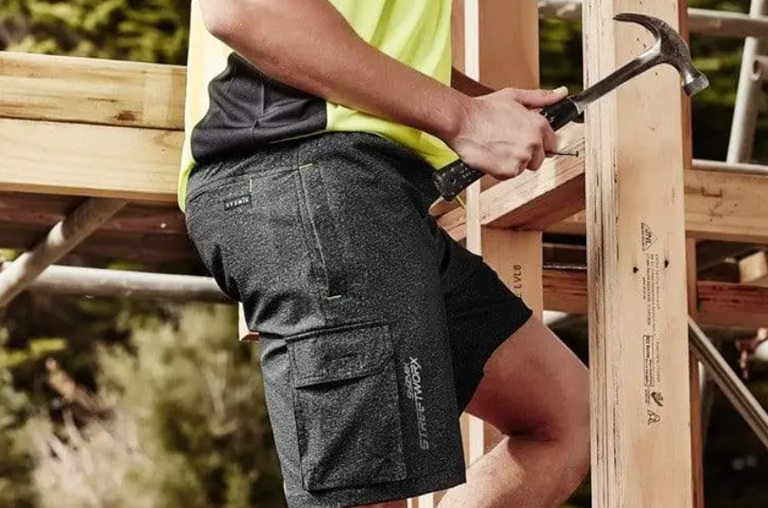
From durable cotton drill to lightweight quick-dry synthetics, there is a wide range of work shorts suited to different trades and working conditions. Selecting the proper workwear shorts should come down to the type of work you do each day and the environment you work in.
For carpenters, builders and bricklayers, heavy-duty cotton drill shorts are often a practical choice. Cotton drill is known for its durability and resistance to everyday wear and abrasion. Many styles also feature reinforced stitching and multiple utility or cargo pockets, making it easier to keep tools, measuring tapes and other small essentials close at hand.
Quick-dry synthetic shorts can be better suited to plumbers, landscapers, electricians and painters working in hot, humid or wet conditions. Fabrics such as polyester and nylon are lightweight, dry quickly and often include stretch panels for greater freedom of movement. This can make them more comfortable during physically demanding tasks or when working outdoors in changing conditions.
Knowing when work shorts are appropriate is just as important as choosing the right fabric. They can be a comfortable option during warmer weather, on suitable residential construction sites or in well-ventilated indoor environments where full-length leg protection is not required.
There are also situations where long work pants are the safer and more appropriate choice. Some commercial construction sites, industrial facilities and mining environments require full-length trousers as part of their workplace safety rules.
Work shorts should also be avoided for tasks such as welding, handling corrosive chemicals, working in confined or abrasive spaces, or clearing dense vegetation. Full-length work pants provide greater coverage and can help protect the legs from sparks, chemical splashes, cuts, scratches and insect bites.
Pants
When workplace guidelines require full leg coverage, or when colder weather sets in, work pants are an essential part of your workwear. Heavy-duty cargo pants and work jeans help protect your legs from flying debris, sharp edges and rough surfaces while providing the durability needed for demanding jobs.
Modern work pants often feature reinforced knees, triple-stitched seams and dedicated tool pockets designed to withstand everyday wear. Some styles also include knee pad pockets, which can make tasks that involve kneeling or crawling on hard surfaces more comfortable for trades such as flooring, plumbing and construction.
Choosing the right fit and fabric is equally important. Well-fitted work pants should provide enough freedom of movement without excess material getting in the way, particularly when working in confined spaces. Keeping a few reliable pairs on hand also means you are better prepared for site requirements and changing weather conditions.
Shirts
A good work shirt should balance durability, comfort and a professional appearance. Cotton drill button-up shirts offer practical coverage while helping protect the skin from sun exposure, dust and minor scratches, making them suitable for both hands-on work and client-facing situations.
High-visibility work shirts are important in environments where workers need to remain easily seen, such as roadworks, warehouses and areas with moving vehicles or machinery. For hot conditions, lightweight ventilated shirts with mesh panels or back vents can improve airflow and help keep you more comfortable during long shifts.
Choosing the right work shirt can help you stay cooler, maintain suitable coverage and present a neat, professional appearance throughout the day.
T-shirts

For warmer days and more casual work environments, a reliable work t-shirt is a useful addition to your wardrobe. Heavyweight cotton t-shirts are breathable, comfortable and durable enough to handle frequent washing and everyday wear.
Moisture-wicking synthetic t-shirts are another practical option for physically demanding work. Their quick-drying fabrics help manage moisture and can provide a lighter, more comfortable feel when you are working in hot or humid conditions.
Jackets
A dependable work jacket can make a major difference when working through cold, windy or wet weather. Heavy-duty canvas jackets with warm linings provide protection from chilly conditions, while water-resistant or waterproof outer layers can help keep you dry when rain sets in.
Insulated high-visibility jackets are particularly useful for early-morning, evening or low-light work where warmth and visibility are both important. Look for practical features such as sturdy zippers, storm flaps and secure pockets for keeping your phone, tools or notes protected from the weather.
Shoes
Your feet take plenty of strain throughout the working day, so suitable safety footwear is essential. Steel-cap boots offer strong toe protection against falling or heavy objects, while composite-toe options provide a lighter alternative in workplaces where metal-free footwear may be preferred.
Quality work shoes should also provide good grip, ankle support and cushioning to help reduce discomfort during long shifts. For outdoor or wet environments, water-resistant or waterproof footwear can help keep your feet dry when working around mud, puddles and damp ground.
Choosing workwear that suits your trade, environment and daily tasks can help you stay safer and more comfortable throughout the day. From durable pants and breathable shirts to protective jackets and reliable footwear, having the right gear makes it easier to stay prepared for whatever the job brings.
