
Contents
The new crop of ATVs and UTVs is brimming with power, capable suspension setups and drivetrains able to handle anything you throw at them. With high-spinning engines (some reaching 10000 revs), switchable 2 and 4WD, lockable diffs and suspension travel primed for technical terrain or hard-packed trails, they’re the enthusiast’s choice, getting you places other vehicles can’t. And they’re the mainstay of many hunting, fishing and leisurely outdoor trips with no tarmac in sight.
The key to all that performance is the tyres getting power to the ground. Here, quad owners have multiple choices. The goal is to choose durable ATV tyres that match the specific terrain and your riding style. This promises optimal traction, surefooted power delivery, lasting durability and above all, safety.
Choosing Tyres That Suit Your Riding Style
How you ride is just as important as where you ride. For casual and leisurely rides on a mix of surfaces, the all-terrain tyres that came with your quad should be just fine. These have decent tread depths and block patterns to provide just enough grip on most surfaces, while still balancing comfort and wear for a tyre that does it all. Possibly not to the ability of specific treads and patterns, but a good starting point before graduating onto more technical terrain or faster runs.
To benefit from the speed and agility that give ATVs their wow factor, consider fitting wheels with tyres in medium tread depths, lower ply count and lower weight. This provides traction on smoother, packed surfaces without succumbing to higher sprung mass that kills acceleration. The benefits are smoother turns, improved steering control and higher top speeds.
Larger ATVs and UTVs, in particular, have steadily replaced heavy-duty machines in areas like agriculture, construction, and maintenance. The heavy loads require tyres with deeper treads, increased puncture resistance with higher ply count, as well as reinforced sidewalls to survive the rigours of everyday work tasks.
Tyres Based on Terrain Types
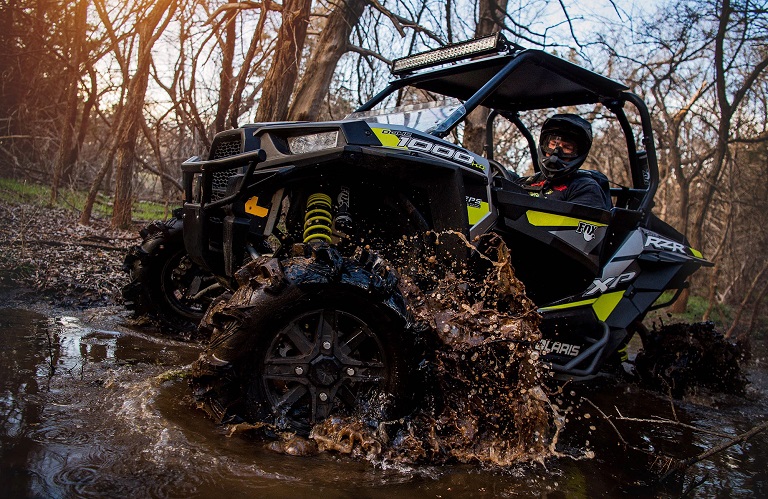
The versatility of quad bikes lies in their suitability for different terrains. This leads to design differences that maximise performance and handling. Common types include:
- Mud: Fitted with aggressive tread patterns and widely spaced, deeper lugs, mud tyres dig deeper into mud and water-drenched terrain. The lugs prevent clogging and ensure more contact with the surface for optimal grip levels.
- Sand: Ideal on sand and loose surfaces, these options are designed to float over trail surfaces. Rear tyres have paddle-like treads to scoop sand with each turn (and push the quad forward), while the front ones feature a ribbed design to assist steering control.
- All-terrain: If you’re riding across varied terrain, consider the benefits of all-terrain ATV tyres. These have balanced lug designs and medium tread depths for proven performance on dirt, gravel and light mud trails. They’re the choice for most recreational riders, with good comfort and decent wear.
- Rocky terrain: For landscapes filled with rocks, boulders and other larger obstacles, go with rock tyres. These have harder compounds and reinforced sidewalls for increased puncture resistance, paired with unique tread patterns with deeply spaced lugs and aggressive blocks to maximise stability and ensure traction.
- Snow/ice: To navigate snow and ice in the Snowies, Grampians and Tasmania, dress your quad with matching snow tyres. These have arrow-like, directional treads to filter snow, slush and water, and deeper, widely spaced lugs with cuts (or sipes) to bite into the surface. Compounds are also less prone to hardening at lower temperatures.
Other Buying Considerations
Tread patterns determine suitability for the terrain, but there are several other factors you should consider when buying the right quad bike tyres. This includes the right size, ply count and construction type.
Sizes are straightforward and listed as height by width, along with the matching rim size in inches. Bigger tyres are the easier way to increase ground clearance without having to shell out hundreds on lift kits or suspension mods. These are necessary in trails and terrain littered with larger obstacles. Smaller options excel in maneuverability and responsiveness, so they are suited to faster runs on harder surfaces. Widths are another handling consideration. Narrower tyres work better in muddy and wet terrain, while wider variants provide the floating effect on sand and loose ground.
Ply count determines durability and weight loading, with higher numbers offering more of both. Tyres with a lower ply count (4 to 6) offer decent durability on lightly packed trails, grass and gravel, with more comfort and lower weight. Up ply count as the terrain gets more technical to prevent punctures and reduce wear. As an illustration, rocky terrain tyres with 8 or more plies feature reinforced sidewalls, heavy-duty construction and more weight to counter sharp edges. The same applies to UTV tyres used in hauling and work applications.
Lastly, choose a tyre in either a bias or radial design. Radial options offer independent functioning of sidewalls and treads, which makes them better for higher speeds and heavier loads while still providing a decent level of comfort. Older bias construction designs have more flexible sidewalls, meaning more control at lower speeds and varied terrains.
