
Contents
From the serviceability of trailer lights and tyres, to the suitability of the extended mirrors on the tow vehicle, there’s a long list of pre-trip inspection items that trailer owners need to go through before taking to the road. Potentially the most important line item on their checklist, however, is the state of their coupler assembly.
Tongue-mounted couplers are responsible for securing trailers to the towing vehicle’s tow ball, and attempting to tow with a damaged, defective or broken coupler can have catastrophic consequences. That’s why trailer owners can’t afford to take anything for granted when it comes to the condition of their couplers. And when a pre-trip inspection reveals a potential coupler problem, they need to be prepared to take immediate steps to address it.
Recognising the Importance of Trailer Coupler Inspections
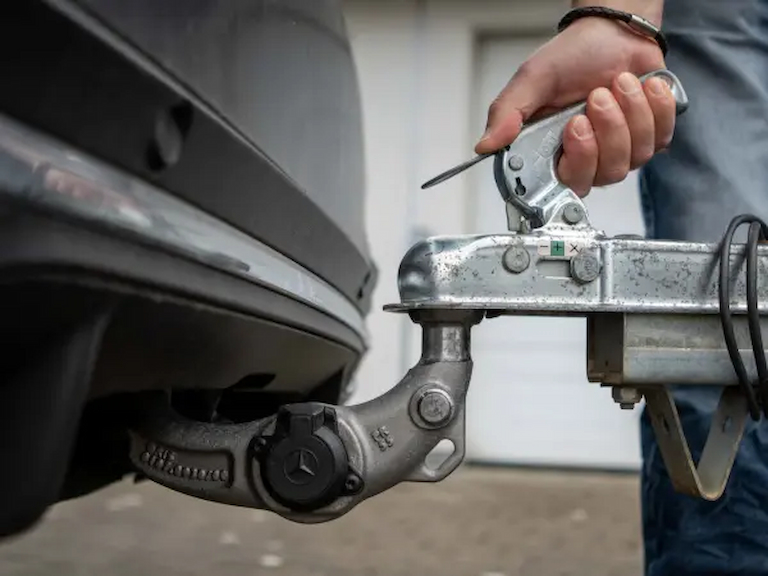
Let’s be honest: while the likelihood of a trailer coupling failing is actually quite low, the fact is unexpected decouplings are frighteningly more common than they should be. The causes vary widely, but they all underline the urgency for owners to only purchase high quality trailer hitch coupling assemblies and to inspect the assembly regularly for defects that would warrant its replacement.
From rigid straight-tongue and A-frame style couplings, to adjustable height and multi-use trailer mounts, there are trailer and caravan couplings for sale for any size or type of towable vehicle on the market. They’re all subjected to the same gamut of stresses and possible mechanical problems though, which can include:
- Excess wear and fatigue. The excess wear caused by regularly towing trailers that are either near or in excess of the coupling’s maximum load rating, especially over harsh terrain, can cause cracks and damage that would only be visible under a thorough inspection.
- Hard knocks and bumps. Repeatedly knocking against or backing too quickly into a trailer hitch can easily bend a tow coupling assembly, accelerating any damage that might have already been caused by wear or fatigue.
- Heavy corrosion. While light surface rust isn’t uncommon on tow couplings, heavy corrosion can conceal pitting and flaking that would prevent the unit from latching properly, or stretching the bolt holes in the coupler’s body.
Make no mistake: while the occasional sticking latch is very much in line with what could be expected with normal camper trailer coupling usage, only regular trip inspections and routine preventive maintenance checks can ensure that the coupler assembly is fully serviceable at all times. Even light rust can obscure minor defects that have the potential to balloon into larger ones – and they can be almost as dangerous as an accidental decoupling.
The Consequences of Towing With Defective Couplers
Although decoupling is the most obvious risk associated with defective trailer couplers and latches, it’s far from the only possible hazard. In fact, a coupling assembly doesn’t actually have to break to cause a problem or to create conditions that lead to a problem, such as:
- A sudden loss of trailer stability. No matter if it’s due to broken or missing latch parts or a severely deformed coupler cup, a compromised coupling assembly can result in a dangerous loss of stability, or even a rollover while the trailer’s still coupled.
- Added stress on other components and systems. As damaged or warped trailer or caravan couplings won’t allow the towed vehicle to track properly, the risk of damage to the trailer’s tongue as well as to the towing vehicle’s brakes and suspension increases considerably.
- Precariously poor weight distribution. With a damaged coupler’s inability to keep the trailer’s mass centred on the tow ball, coupling assemblies have no way to equalise the trailer’s weight, raising the likelihood of trailer sway causing even further damage to the coupler and the latch.
Regardless of whether it’s due to persistent exposure to salt and moisture, excessive coupling and uncoupling cycles or simply from a lack of proper adjustment, towing with a defective trailer or caravan coupling is a dangerous proposition. That’s why trailer couplings have to be inspected before every road trip, intermittently during longer and heavier trips, and at least once a month or every 1000km under regular usage.
Points To Incorporate When Creating Coupler Inspection Checklists
While there’s no understating how vital a thoroughly conducted trailer tow coupling inspection is, it’s also important to remember that it doesn’t involve rocket science. It does, however, incorporate a few crucial safety points that need to be followed, especially if less-than-optimal towing conditions are expected, and they include:
- Visually inspecting for assembly damages such as bends, cracks and underside corrosion;
- Confirming that all coupling mounting bolts are present and sufficiently tightened;
- Ensuring the inside of the coupler cup isn’t worn or damaged;
- Ensuring the coupler latch is free from any dirt or debris that could prevent proper locking;
- Verifying that the latching mechanism is operating freely and isn’t loose or sticking; and,
- Making sure that the latch is correctly adjusted and lubricated.
A quick run-through of this list of trailer coupler maintenance bullets is enough to identify, isolate and correct virtually any assembly defect. Not every defect can be repaired though, which is why anytime a serious trailer coupling defect is detected, a stronger, sturdier coupling replacement needs to be mounted before undertaking any further towing.
What To Look For When Replacing Worn Trailer Couplings
With so many opportunities to locate trailer couplers for sale online, the process of finding an appropriate replacement isn’t complicated. A proper search still requires an honest assessment of the type of trailering that’s likely to be done though, along with a good appraisal of the towing vehicle’s capabilities.
Towing jobs that would ordinarily involve heavier loads, cover rougher terrain, or require more frequent coupling and uncoupling cycles would automatically necessitate a more careful selection process, but in all cases trailer owners have to remain mindful of the following:
- The aggregate trailer mass (ATM). As a basic rule, a coupler’s weight rating should always comfortably exceed the trailer’s ATM. A coupler that’s frequently on the limit of its capacity runs a very real risk of experiencing premature problems.
- Tow ball dimensions. Standard Australian tow balls are 50mm and 70mm. A coupling that’s too large for the tow ball is guaranteed to create excessive movement, while forcing a coupling that’s too small onto a larger tow ball is almost sure to crack the coupler cup, with either case likely to result in an unexpected decoupling.
- Coupler mounting style. There are various styles of trailer couplings for sale in Australia, and trailer owners need to be sure that their choice is fully compatible with their trailer’s tongue configuration and other towing characteristics.
Given the importance of ensuring that a trailer owner always has a serviceable replacement at their disposal, it makes sense to have a spare coupling when towing. It’s a relatively small expense when weighing the possibility of having to leave behind or potentially even lose a trailer.
The Final Word
At the end of the day, trailer owners have to remember that safety is the most important attribute when they’re on the road. It means checking and periodically re-checking a trailer’s most critical points – and no single point is more critical than where the trailer and the towing vehicle are coupled.
Investing in high quality trailer hitch coupling assemblies and inspecting them frequently is the key to safe trailering. They’re among the towing accessories that it pays to always have two, and to always have the best.
