
Contents
Ever stood in front of your wardrobe on a big meeting morning and figured out you don’t have the right shirt for it? It happens to the best of us, and most of the time it comes down to not knowing which styles actually work for the boardroom. Once you figure out how to choose the right style, the rest of your wardrobe falls into place.
Men’s Shirt Styles
What you wear makes a difference in corporate environments, especially when you want to leave a good first impression. Your shirt is a good starting point. Once you know which styles suit you best, you can head straight for them when you’re shopping and build a closet full of outfits that always look sharp.
The Classic Button-Up
If you’re new to the business world, think of button-up shirts as your bread and butter. These classic men’s business shirts with structured collars have buttons down the front and clean lines that tuck in smoothly. If you’re building your wardrobe now, get a white, cream, light blue, and a black one, and you’ll never look out of place in a boardroom.
The Spread Collar
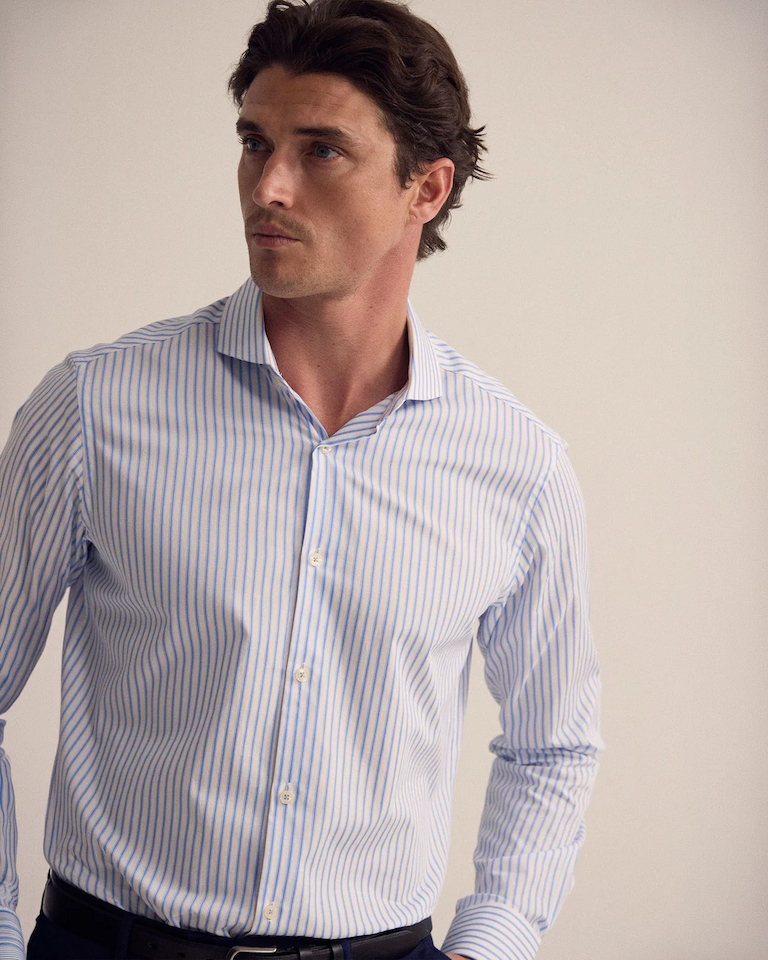
For meetings and events where you have to wear a tie and look your best, go for a spread collar. The wider points give you room for a bigger knot, which reads as polished and generally more put-together. Keep the shirt solid or so slightly patterned that the collar does the talking.
The Button-Down Collar
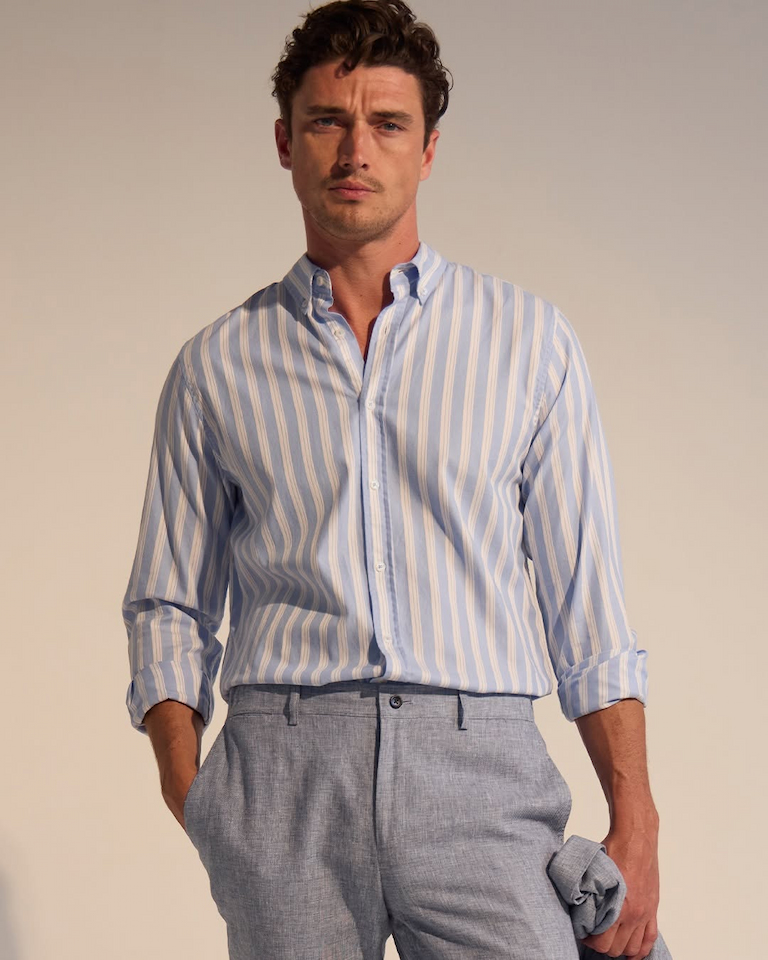
A step more relaxed than the spread collar, but still sharp enough for the office. The collar points button right to the shirt, so they stay put whether you’re wearing a tie or not. It’s the shirt you reach for when you want to look good without trying too hard.
The French Cuff
This is your shirt for the big meetings. What makes it different from the previous ones is the fold-back cuffs and a set of cufflinks that instantly dress up a suit or blazer. It may seem like a small detail, but people notice it.
The Patterned Shirt
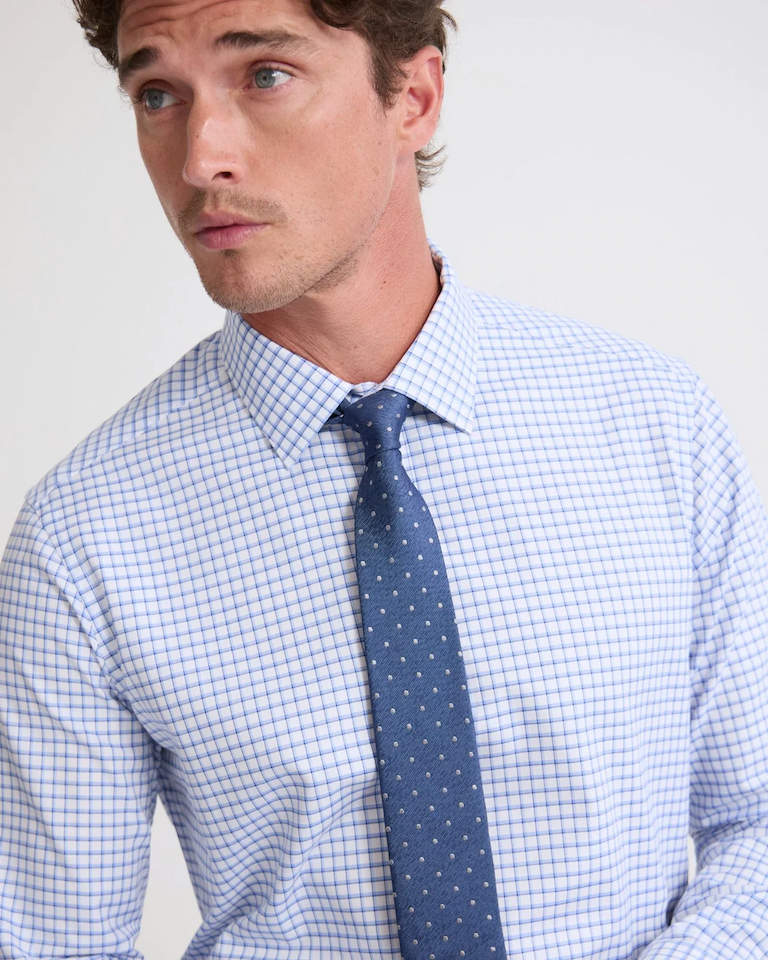
Solids are the safe choice, but from time to time, you can throw on a subtle check or fine stripe shirt to show a bit of your personality and style. Still, it’s important to keep the pattern small and the rest of your outfit simple. That way, you look confident, not loud.
The Banker’s Shirt
For the moments you truly want to stand out and look sophisticated, opt for this one. It features a white collar and cuffs, a contrasted body and a button closure. It’s a classic favourite among lawyers and finance men who want to look appropriate for their role.
You can always start with the classic options and experiment with the ones you feel are out of your comfort zone once you’re ready.
How Should a Shirt Fit for Men?
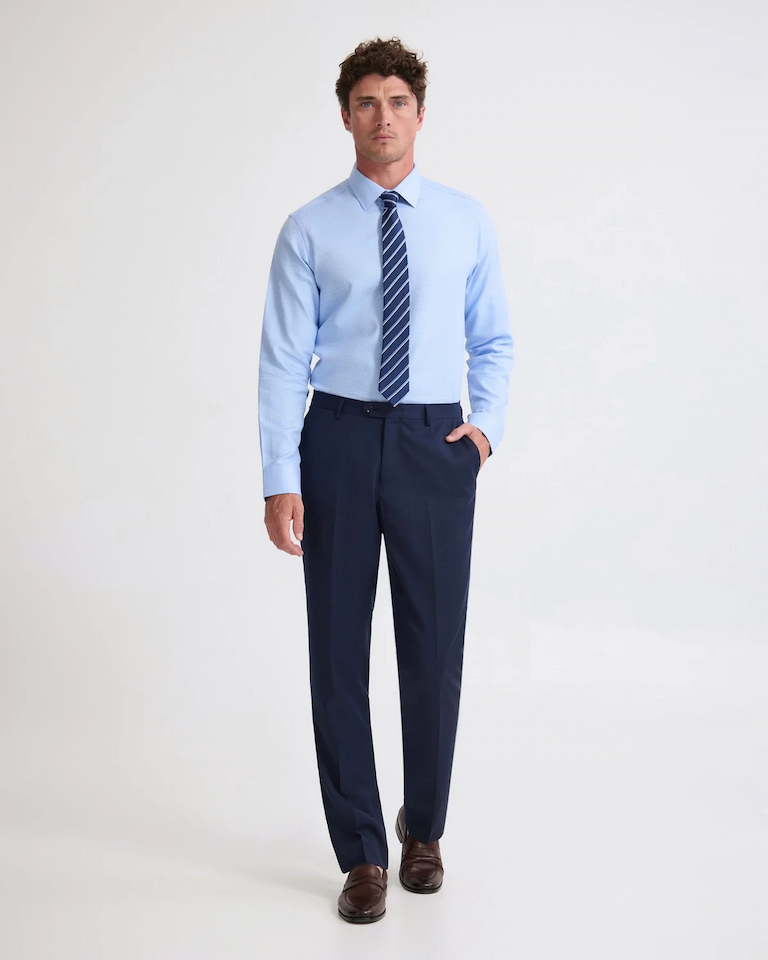
There is no point in choosing men’s business shirts that look great on the hanger if they don’t fit your body. A great shirt can still look off if the fit’s wrong. Understanding the fit rules will help you find the right shirt and save you a lot of money.
Shoulders
A shirt that fits your shoulder right has a seam that sits right at the edge of your shoulder bone. If it’s too far down, it will look baggy, and if it’s too high, it’ll pull across your back and chest.
Collar
Once you button up, you should be able to put one or two fingers between the collar and your neck. If it’s tighter than that, you’ll feel it by lunch, or if it’s looser, the shirt is probably big, and your tie won’t sit right.
Chest and Sleeves
The shirt should hug your chest without pulling at the buttons. You want about 5- 7 cm of fabric on the sides, no more. And as for your sleeves, with your arms down, the cuffs should hit right where your wrist meets your hand. Under a jacket, a little cuff should still peek out.
Get these things on your checklist, and every shirt in your closet will fit like it was made for you.
Mistakes to Avoid
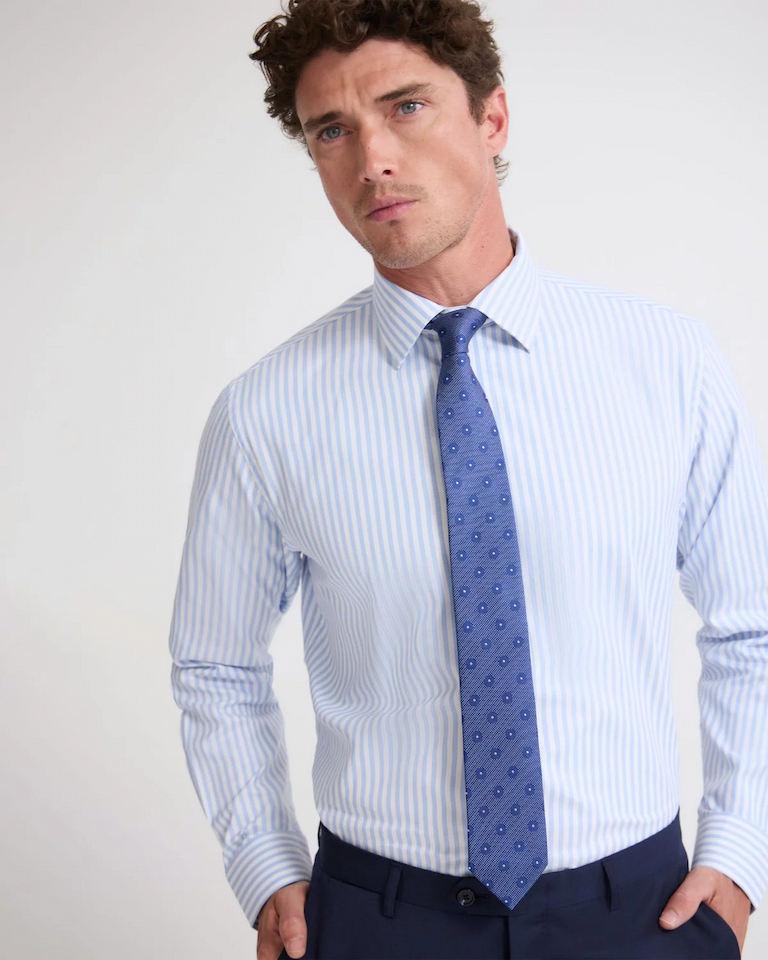
The wrong fit’s not the only thing that can make your men’s business shirts dusty in your wardrobe. You should also avoid mixing bold patterns with bold patterns, as it looks messy. Instead, pair a statement-piece shirt with solid pants.
If you’re keen on mixing patterns, there is one way to do it right. For instance, big patterns and small patterns work together, but stripes on stripes never do. If you’re still finding your style, stick to one patterned item per outfit until you’ve mastered the art of mixing.
Also, trends move on, so give your wardrobe a fresh look with a few new pieces every 12 to 18 months. Lapels between 7.5 and 10cm stay classic, and ties around 8 to 9.5cm wide keep you looking modern, not dated.
Get your shirt game sorted, and the rest of your business wardrobe follows suit. It’s a small change that makes a big difference every time you walk into a room of people that you want to impress.
