
Contents
Being successful in the foodservice industry means being able to deliver to customers’ needs, fresh and prompt. Restaurants, cafes, hotels, fast food restaurants and catering businesses can work efficiently only if they have the right appliances and workforce, and a helpful essential is a commercial warmer for food.As the name suggests, commercial warmers are designed to keep cooked food warm while waiting to be served. And the most common misconception people have is that the food continues to cook inside it, when its main function, in fact, is to keep it warm and slow down cooling.
Types of Commercial Food Warmers
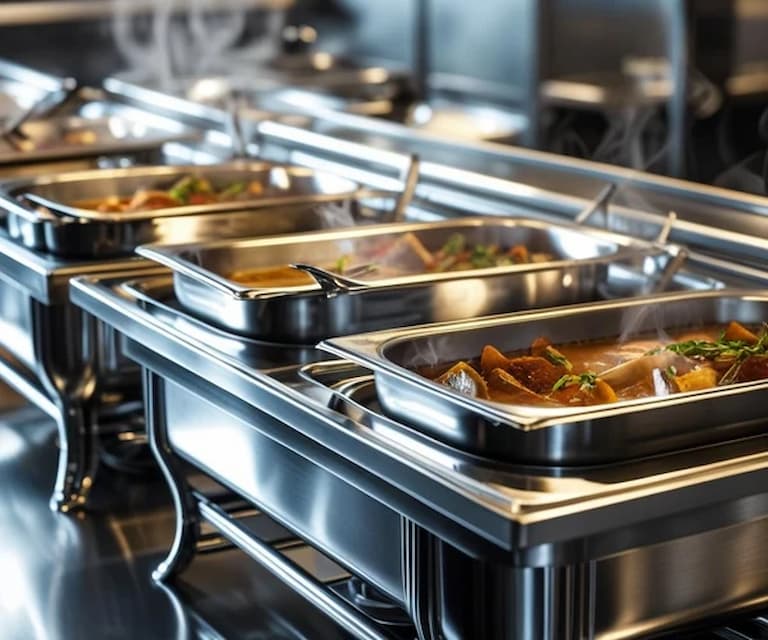
The choice of dependable commercial food warmers is huge, giving you the chance to choose the one your business needs.
Countertop
The countertop types of warmers are designed to sit on the countertop, making them a practical and compact option for warming food in buffets, small venues, snack bars, food corners, and self-service lines. Being placed over the countertop means that they are significantly smaller and are designed to keep only a small amount of food warm.
Large
These warmers are very different from the previous type. They are large, look like cabinets and can hold larger volumes of food. They are mainly used in professional kitchens that need to manage large quantities of food, catering, hotels, canteens, restaurants or centralised production kitchens. The fact that they are large means that these warmers are perfect for keeping an organised workflow.
Mobile
As the name suggests, mobile food warmers are portable, perfect for moving from one place to another. These commercial warmers are mainly used in production centres, hospitals and larger canteens. In other words, they are perfect for institutional foodservice, where the main goal is distributing food while keeping it warm.Another interesting thing you should know is that you can choose between dry-heat and wet-heat warmers.
- Dry Heat – Uses direct heating elements (usually hot air) to keep food dry and crispy.
- Wet-Heat – Uses steam tables or water baths to keep the food moist.
Things to Consider When Buying One
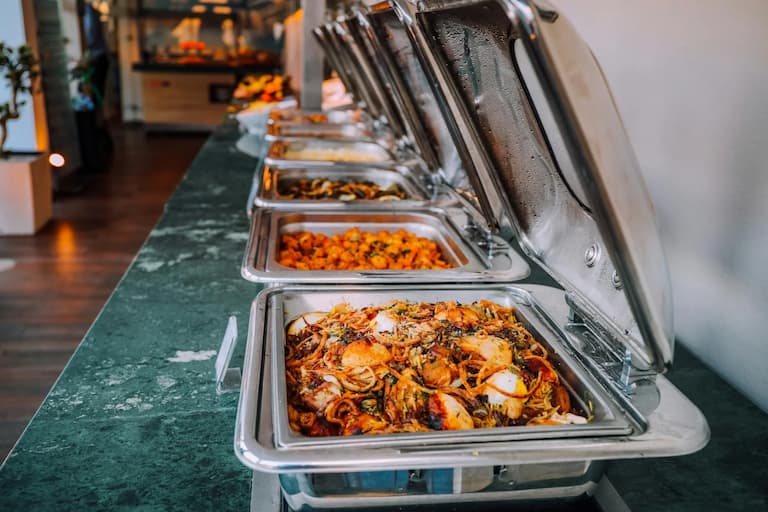
Type of Food
When searching for the right one, the first thing you should consider is the type of food you need the warmer for. Knowing that there are dry and wet heat warmers, you’ll need a wet one for moist foods like mashed potatoes, sauces and similar foods, and dry heat warmers for crispier, drier food like fries, fried chicken, fried zucchini, and more.Pastries and baked food, on the other hand, need to be placed in warmers with transparent displays so that customers can see what you have to offer.
Capacity
The size of the warmer is closely related to the volume of food you need. For smaller volumes of food, choose countertop models. For larger quantities, choose larger cabinet-type warmers. Lastly, consider whether you need a front-of-house or back-of-house display, and this depends mainly on your business.
Temperature Control
When searching for the right model, make sure to choose one that offers thermostatic precision temperature control. This will give you greater control over the temperature and food stability.
Humidity and Ventilation
Choosing a model that offers proper humidity and ventilation is essential for keeping food like pasta, rice, carved meat and baked goods from going stale or drying out.
Durability and Ease of Maintenance
First things first, under no circumstances should you settle for a warmer made from other materials than high-grade stainless steel. This material is specifically used in commercial kitchens and appliances because of its quality, durability and ease of maintenance. It’s designed for daily use. Most importantly, it can withstand cleaning and sanitation.
Power and Installation
Different brands might offer models with different voltage and amperage, so when searching for the right one for your needs, make sure your kitchen meets the voltage and amperage requirements of the preferred model. Otherwise, you’ll need to get dedicated circuits installed.
How Long Can You Leave Food in a Commercial Food Warmer?
Generally speaking, you can leave food in a professional warmer for up to four hours without a problem. All it takes is for the appliance to meet the health and safety guidelines while maintaining the needed temperature, which is around 57-60°C or above. However, if the temperature drops below this number, it’s considered dangerous as bacteria can multiply rapidly. In such cases, the food should be discarded, no questions asked. This is why having a temperature controller and internal thermometer is a must. An important thing to keep in mind, though, is that even if the food is kept at a safe temperature, after nearly two hours its quality changes. This means its colour and its appearance can change a bit, which is normal. However, some guests might not be happy with this. So the practice to follow is not to keep food in longer than two hours.
